
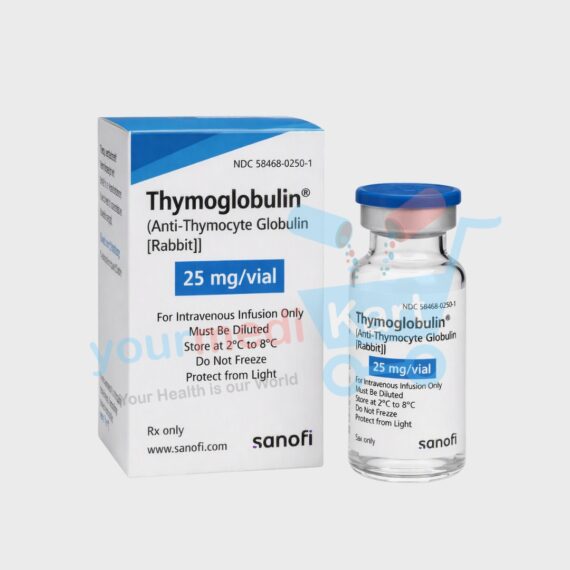
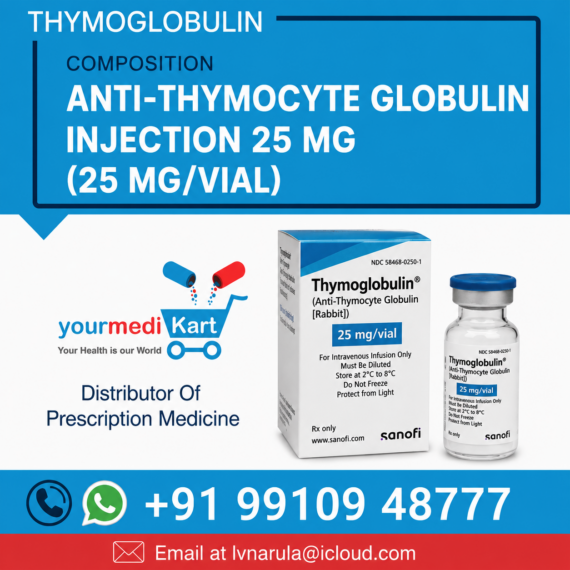
Thymoglobulin Injection
₹ 0.00₹ 0.00
- Brand: Thymoglobulin®
- Strength: 25 mg
- Active Ingredient: Anti-Thymocyte Globulin
- Dosage Form: Injection – sterile lyophilized powder
- Route of Administration: Intravenous infusion
- Pack: Single-dose vial
- Therapeutic Category: Immunosuppressant / Antithymocyte Immunoglobulin
- Prescription Required: Yes
Each single-dose vial contains 25 mg of anti-thymocyte globulin as a sterile lyophilized powder intended for reconstitution before intravenous administration.
Description
Thymoglobulin 25 mg Injection (Anti-Thymocyte Globulin)
Thymoglobulin 25 mg Injection contains rabbit anti-human thymocyte immunoglobulin, also known as Anti-Thymocyte Globulin (Rabbit). It is an immunosuppressive medicine that reduces the activity of certain immune cells, particularly T lymphocytes. Thymoglobulin is mainly used in organ transplantation to help prevent or treat graft rejection. Thymoglobulin 25 mg Injection price get best at yourmedikart
Each vial contains 25 mg of rabbit anti-human thymocyte immunoglobulin. Thymoglobulin is supplied as a powder that healthcare professionals reconstitute and dilute before giving it as a slow intravenous infusion in a hospital setting.
Uses of Thymoglobulin 25 mg Injection
Prevention of Kidney Transplant Rejection
Thymoglobulin is used with other immunosuppressive medicines to help prevent graft rejection after kidney transplantation. It reduces the immune response against the transplanted organ and helps the body accept the new kidney.
Treatment of Steroid-Resistant Kidney Rejection
Thymoglobulin can also treat steroid-resistant graft rejection after kidney transplantation. Doctors may use it when rejection does not respond adequately to corticosteroid treatment.
Prevention of Heart Transplant Rejection
The product information also lists Thymoglobulin for the prevention of graft rejection after heart transplantation, usually as part of a combination immunosuppressive regimen.
Therapeutic Effects of Thymoglobulin
How Anti-Thymocyte Globulin Works
Anti-Thymocyte Globulin contains antibodies that recognise several proteins on human T lymphocytes. It reduces the number and activity of these immune cells, producing a strong immunosuppressive effect. This helps reduce the immune response responsible for attacking a transplanted organ.
Effect on the Immune System
Thymoglobulin causes significant depletion of lymphocytes, particularly T cells. This immune suppression helps prevent or control rejection, but it can also increase the risk of infections and reduce blood-cell counts.
Interaction with Other Drugs
Other Immunosuppressive Medicines
Thymoglobulin is commonly used together with other immunosuppressive medicines following transplantation. Because combining medicines can increase immune suppression, your doctor will carefully monitor blood counts and signs of infection.
Vaccines
Avoid live or live-attenuated vaccines during or shortly after treatment unless your doctor specifically recommends them. Thymoglobulin suppresses the immune system, which can affect the safety and effectiveness of certain vaccines.
Other Medicines
Tell your doctor about every medicine, supplement, or herbal product you use. Formal drug-interaction studies have not been performed with Thymoglobulin, but it can affect immune responses and some laboratory or antibody-based tests.
More Information About Thymoglobulin
Strength and Form
Thymoglobulin 25 mg is supplied as a white powder for solution for infusion. Each vial contains 25 mg of rabbit anti-human thymocyte immunoglobulin. After reconstitution, each mL contains 5 mg of the active substance.
Storage
Unopened Thymoglobulin vials should be stored in a refrigerator at 2°C to 8°C. The medicine should remain in its original packaging and be protected according to the manufacturer’s storage instructions.
How to Administer Thymoglobulin
Recommended Dose
The dose of Thymoglobulin depends on the type of transplant, the treatment purpose, the patient’s condition, and the other immunosuppressive medicines being used. For kidney-transplant rejection prevention, the product information lists 1–1.5 mg/kg/day for 3–9 days. For steroid-resistant kidney rejection, the reference dose is 1.5 mg/kg/day for 7–14 days. Heart-transplant rejection prevention may use 1–2.5 mg/kg/day for 3–5 days.
Method of Administration
Thymoglobulin must be administered by a healthcare professional through intravenous infusion. The powder is first reconstituted and then diluted with an appropriate infusion solution. The infusion should be given slowly through a high-flow vein, with the total infusion time lasting at least 6 hours according to the referenced product information.
Premedication and Monitoring
Doctors generally give corticosteroids and antihistamines before Thymoglobulin infusion. An antipyretic such as paracetamol may also improve tolerability. Patients require close monitoring during and after the infusion because serious allergic and infusion-related reactions can occur.
Safety Advice
Breastfeeding
It is not known whether Thymoglobulin passes into human breast milk. Because other immunoglobulins can be present in breast milk, the product information recommends discontinuing breastfeeding during Thymoglobulin therapy. Discuss breastfeeding with your doctor before treatment.
Alcohol
Avoid alcohol unless your doctor advises that it is safe. Alcohol may worsen dizziness, weakness, nausea, or other symptoms during treatment and may be inappropriate during the early post-transplant period.
Liver
Tell your doctor if you have liver disease or abnormal liver-function tests. Thymoglobulin should be used carefully in patients with hepatic disease, and doctors may monitor liver function and coagulation parameters during treatment.
Kidney
Thymoglobulin is frequently used in patients undergoing kidney transplantation. The referenced product information states that no dose adjustment is required solely because of renal impairment, but your doctor will continue to monitor kidney function and the transplanted organ closely.
Lungs
Serious infusion-related reactions can sometimes affect breathing. Cytokine release syndrome may cause respiratory problems, low blood pressure, pulmonary oedema, or other serious cardiorespiratory complications. Seek immediate medical attention for sudden breathing difficulty or chest discomfort during or after infusion.
Driving
Thymoglobulin can cause reactions such as fever, chills, dizziness, weakness, or cytokine release syndrome. Because these effects may impair alertness, patients should not drive or operate machinery around the time of infusion until their doctor confirms that it is safe.
Pregnancy
There are limited data regarding the use of Thymoglobulin during pregnancy. Animal reproductive studies have not been conducted, and it is not known whether Thymoglobulin can harm an unborn baby. Doctors should use it during pregnancy only when clearly needed.
Side Effects of Thymoglobulin
Common Side Effects
Possible side effects of Thymoglobulin include:
- Fever
- Chills or shivering
- Nausea
- Vomiting
- Diarrhoea
- Headache
- Rash
- Itching
- Muscle pain
- Low blood pressure
- Shortness of breath
- Increased liver enzymes
- Anaemia
- Neutropenia
- Thrombocytopenia
- Lymphopenia
- Infections
Serious Side Effects
Thymoglobulin can cause serious infusion-associated reactions, anaphylaxis, cytokine release syndrome, severe infections, sepsis, liver problems, and significant reductions in white blood cells or platelets. Rare severe or life-threatening reactions have been reported.
When to Contact Your Doctor
Tell your healthcare team immediately if you develop severe breathing difficulty, swelling of the face or throat, sudden low blood pressure, severe chills, persistent fever, unusual bleeding, severe weakness, or other signs of a serious infection or allergic reaction.
Word of Advice
Thymoglobulin 25 mg Injection is a specialised immunosuppressive medicine that should only be administered under strict medical supervision, generally in a hospital or transplant-care setting. Your doctor may regularly monitor blood-cell counts, liver function, infection symptoms, and the condition of the transplanted organ. Do not change the dose or treatment schedule yourself.


Reviews
There are no reviews yet.