
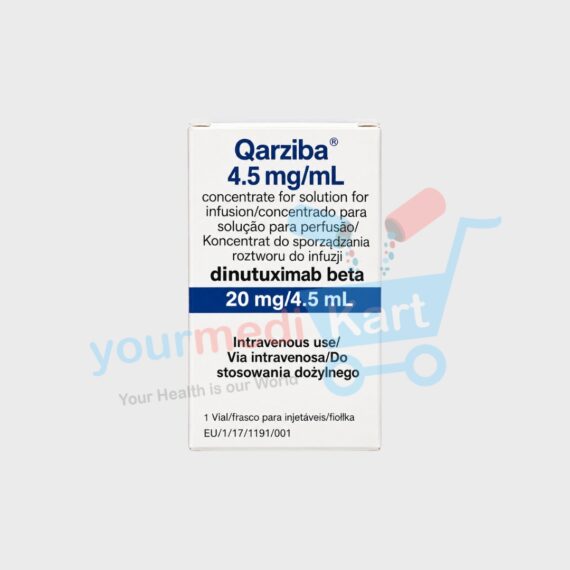

Qarziba 4.5 mg
₹ 0.00₹ 0.00
Generic name: Dinutuximab [ DIN-ue-TUX-I-mab]
Brand name: Qarziba
Dosage form: Intravenous solution (17.5 mg/5 mL)
Drug class: Miscellaneous Antineoplastics
Qarziba is a cancer medicine use to treat neuroblastoma. A cancer of nerve cells, in patients over 1 year of age.
Description
Qarziba 4.5 mg/mL injection contains Dinutuximab beta, a chimeric monoclonal antibody used as an anticancer treatment for certain patients with high-risk neuroblastoma. Dinutuximab beta targets GD2, a substance found in high amounts on the surface of neuroblastoma cells, and helps the immune system recognise and destroy these cancer cells.
Qarziba is supplied as a 4.5 mg/mL concentrate for solution for infusion. Each vial contains 20 mg of Dinutuximab beta in 4.5 mL. Healthcare professionals administer Qarziba through an intravenous infusion in a hospital under the supervision of a doctor experienced in cancer treatment.
Uses of Qarziba 4.5 mg/mL
Qarziba 4.5 mg/mL is used for specific patients with high-risk neuroblastoma, a cancer that develops from nerve cells.
High-Risk Neuroblastoma
Dinutuximab beta is indicated for patients aged 12 months and older with high-risk neuroblastoma who have previously received induction chemotherapy, achieved at least a partial response, and then received myeloablative therapy followed by stem cell transplantation.
Relapsed or Refractory Neuroblastoma
Qarziba can also be used in patients with a history of relapsed or refractory neuroblastoma, with or without residual disease. Before starting Dinutuximab beta in relapsed disease, any actively progressing disease should be stabilised using appropriate treatment.
Combination Treatment
In patients with relapsed or refractory disease and in some patients who have not achieved a complete response after first-line treatment, doctors use Qarziba together with interleukin-2 (IL-2).
Therapeutic Effects of Dinutuximab Beta
Dinutuximab beta is a monoclonal antibody that specifically targets GD2, a molecule present in high amounts on neuroblastoma cells.
When Dinutuximab beta binds to GD2 on cancer cells, it helps activate the body’s immune system against those cells. This immune response can lead to the destruction of neuroblastoma cells and helps control the disease.
Interaction with Other Drugs
Qarziba is often used as part of a broader cancer treatment plan. Tell the doctor about all medicines, supplements, and treatments the patient receives before starting Dinutuximab beta.
Interleukin-2
Doctors may administer Qarziba with IL-2 in patients with relapsed or refractory neuroblastoma or in certain patients who have not achieved complete response after first-line treatment. Combining these medicines can increase treatment-related adverse effects, so close medical monitoring is required.
Other Cancer Treatments
Patients receiving chemotherapy, stem cell transplantation, isotretinoin, or other cancer treatments should provide the complete treatment history to their oncology team. The doctor will determine the appropriate timing and combination of therapies.
Other Medicines
Tell the healthcare team about prescription medicines, over-the-counter medicines, vitamins, and herbal supplements before receiving Qarziba.
More Information
Qarziba 4.5 mg/mL contains Dinutuximab beta 4.5 mg per mL. Each vial contains 20 mg of Dinutuximab beta in 4.5 mL of concentrate. It is intended for intravenous infusion after appropriate dilution.
Hospital Use
Qarziba is restricted to hospital use and must be administered under the supervision of a doctor experienced in oncology treatment. The healthcare team must be prepared to manage severe allergic reactions, including anaphylaxis.
Storage
Store Qarziba according to the product-specific instructions and maintain the required cold-chain conditions. Do not use the medicine if it has been frozen or if the product shows signs of damage or deterioration.
Prescription Medicine
Qarziba is a prescription anticancer medicine. Only a qualified oncology team should decide whether Dinutuximab beta is appropriate and determine the treatment schedule.
How to Administer Qarziba 4.5 mg/mL
Qarziba is administered as an intravenous infusion by a healthcare professional. Patients should not attempt to self-administer Dinutuximab beta.
Recommended Dose
Treatment with Qarziba consists of 5 consecutive courses, with each course lasting 35 days. The recommended total dose is 100 mg/m² per course, with the individual dose calculated according to the patient’s body surface area.
Infusion Schedule
Depending on the treatment plan, Qarziba may be administered as a continuous infusion over 10 days or as daily infusions over 5 days within each 35-day treatment course. The oncologist determines the appropriate schedule for the patient.
Monitoring During Infusion
The healthcare team closely monitors the patient during and after infusion. Pain, allergic reactions, fever, changes in blood pressure, breathing problems, and other reactions can occur during treatment.
Safety Advice
Breastfeeding
Do not breastfeed while receiving Qarziba unless your doctor specifically advises you to do so. Discuss breastfeeding with the treating oncologist before starting Dinutuximab beta.
Alcohol
Avoid alcohol unless the treating doctor confirms that it is appropriate. Patients receiving Qarziba often receive other anticancer medicines, so alcohol use should be discussed with the oncology team.
Liver
Tell the doctor if the patient has liver disease or abnormal liver function. The healthcare team will assess liver function and other laboratory parameters before and during treatment.
Kidney
Inform the doctor about any kidney disease or reduced kidney function. Qarziba treatment requires appropriate medical assessment and monitoring of kidney and other organ functions.
Lungs
Tell the doctor if the patient has breathing problems or lung disease. Dinutuximab beta can cause serious infusion-related reactions, so the medical team needs to monitor breathing and oxygen levels when necessary.
Driving
Qarziba is generally used in children receiving specialist cancer treatment. Patients may experience pain, fever, dizziness, fatigue, or other treatment-related effects that can affect normal activities. Follow the healthcare team’s advice regarding activities requiring alertness.
Pregnancy
Tell the doctor if the patient is pregnant or could become pregnant. Discuss appropriate pregnancy precautions with the oncology team before receiving Dinutuximab beta.
Side Effects of Qarziba 4.5 mg/mL
Qarziba can cause side effects, and some reactions may be serious. Commonly reported effects include:
- Fever
- Pain
- Allergic or hypersensitivity reactions
- Vomiting
- Diarrhea
- Low blood pressure
- Capillary leak syndrome
- Headache
- Fatigue
- Injection or infusion-related reactions
Fever and pain are among the most frequently reported side effects with Qarziba.
Infusion-Related Reactions
Dinutuximab beta can cause hypersensitivity reactions during or after infusion. The healthcare team monitors the patient closely and keeps emergency treatment available because severe allergic reactions, including anaphylaxis, can occur.
Severe Pain
Pain is a common effect of Qarziba and can sometimes become significant. The medical team may provide appropriate pain-management medicines during treatment.
Low Blood Pressure
Qarziba can cause hypotension. The healthcare team monitors blood pressure during treatment and provides supportive treatment when necessary.
Capillary Leak Syndrome
Dinutuximab beta can cause capillary leak syndrome, in which fluid moves from blood vessels into surrounding tissues. This can cause swelling, low blood pressure, and other serious complications and requires immediate medical management.
Word of Advice
Use Qarziba 4.5 mg/mL (Dinutuximab beta) only under the supervision of an experienced oncology team. The medicine must be administered in a hospital or appropriate specialist setting where healthcare professionals can manage severe infusion-related or allergic reactions.
The doctor will monitor the patient’s blood tests and organ function before and during treatment. Treatment may be delayed, adjusted, or stopped if serious side effects occur.
Inform the healthcare team immediately if the patient develops severe pain, breathing difficulty, facial or throat swelling, sudden low blood pressure, persistent vomiting, severe diarrhea, or other unusual symptoms during or after the infusion.








Reviews
There are no reviews yet.